
The transition away from walking is not an endpoint of loss, but a starting point for redesigning your identity and sense of independence.
- Grief and anger are normal responses to the loss of function, not signs of weakness.
- True independence shifts from physical self-sufficiency to the strategic use of tools and support to maximize life engagement.
Recommendation: Focus on cultivating a “seated perspective” — a unique point of view that allows you to reclaim agency and find new ways to contribute and connect.
The moment a doctor, a loved one, or your own body tells you that walking is no longer a safe or viable option is a profound threshold. It can feel like a door closing on a life defined by movement, freedom, and a certain kind of independence. The grief is real and palpable, often accompanied by a surge of anger and a sense of deep injustice. Many guides focus on the practicalities of this change—the equipment, the home modifications—but they often skim over the seismic emotional shift required.
The conventional wisdom about navigating loss, often packaged into neat stages, can feel inadequate or even dismissive. This transition is far more than a physical limitation; it’s a fundamental challenge to your identity. But what if the path forward isn’t about mourning what you’ve lost, but about actively and intentionally reframing your world? What if dignity isn’t tied to the ability to stand, but to the courage to see your life from a new, seated perspective?
This article moves beyond the platitudes of “staying positive.” It is a compassionate guide to the complex emotional and psychological work of this transition. We will explore how to process difficult emotions like anger, redefine what it means to be independent, care for your body with respect, navigate social changes, and ultimately find a new, harmonious sense of well-being. This is not about accepting defeat; it’s about discovering a different, equally valid, way of living fully.
This guide is structured to walk you through the key facets of this life transition, from processing initial emotions to finding new avenues for connection and well-being. Explore the sections below to navigate your journey with insight and support.
Summary: A Guide to Navigating Life Beyond Ambulation
- Why Anger Is a Common Reaction to Losing Walking Ability?
- How to Redefine “Independence” When You Are Seated?
- Stretching Routines to Prevent Contractures in Non-Ambulatory Legs
- The Risk of Pressure Sores When Ambulation Stops
- How to Tell Friends You Now Use a Wheelchair?
- Applying Cognitive Behavioral Health Strategies for Senior Depression
- Choosing Between Manual and Power Wheelchairs for Long-Term Shoulder Health
- Cultivating Harmonious Well-Being Through Intergenerational Connection
Why Anger Is a Common Reaction to Losing Walking Ability?
Anger is often the first and most powerful emotion to surface when facing the loss of ambulation. This isn’t a sign of a bad attitude; it is a profound and healthy “protest energy.” It’s your spirit fighting back against a monumental loss of autonomy, identity, and the life you knew. This anger is a form of grief. As one man, Larry Watson, described his journey, he experienced “grief recovery because you’re mourning the loss of what you were.” It’s a valid and necessary part of the process, and suppressing it can be counterproductive to long-term emotional health.
Psychological research confirms this experience. According to studies on the emotional journey of new wheelchair users, shock, denial, anger, and depression are all common emotions before a person can reconcile with their new reality. Understanding this helps normalize your feelings. Your anger is not just about the inability to walk; it’s a primary anger at the loss itself and often a secondary anger at a world that suddenly feels inaccessible and unaccommodating.
The key is to channel this energy productively. Instead of letting it consume you or turning it inward, recognize it as a signal of your own resilience. It shows you are not passive in this transition. By using “I” statements—”I feel angry at this limitation”—you own the emotion without blaming others. This is the first step in processing the feeling, allowing you to move through it rather than getting stuck in it. Fully engaging with this anger, as Mr. Watson did over his three-year journey, is what ultimately paves the way for acceptance and a new beginning.
How to Redefine “Independence” When You Are Seated?
For many, the word “independence” is synonymous with physical self-sufficiency. The transition to a wheelchair can feel like a direct assault on this core value, leading to a crisis of self-worth. However, the key to reclaiming your dignity lies in a powerful mental shift: redefining independence not as “doing everything by myself,” but as “directing my own life with the best tools available.” This is the move from total independence to strategic interdependence.
For elderly individuals who use wheelchairs, maintaining autonomy isn’t just about physical capabilities—it’s deeply connected to their sense of dignity, self-worth, and overall wellbeing.
– Hovi Care Research Team, 6 tips for encouraging independence in elderly wheelchair users
This new model of independence embraces empowerment over limitation. It means recognizing that your agency—your ability to make choices and control your environment—is what truly matters. Instead of feeling diminished by needing a tool, you can see the wheelchair as a vehicle for engagement with the world. Furthermore, as research suggests, the most successful approaches recognize that independence exists on a spectrum rather than as an absolute state. Asking for help to open a door so you can conserve energy for a meaningful conversation is a strategic, independent choice.
Modern technology offers powerful ways to exercise this new form of independence, reinforcing your role as the director of your life.
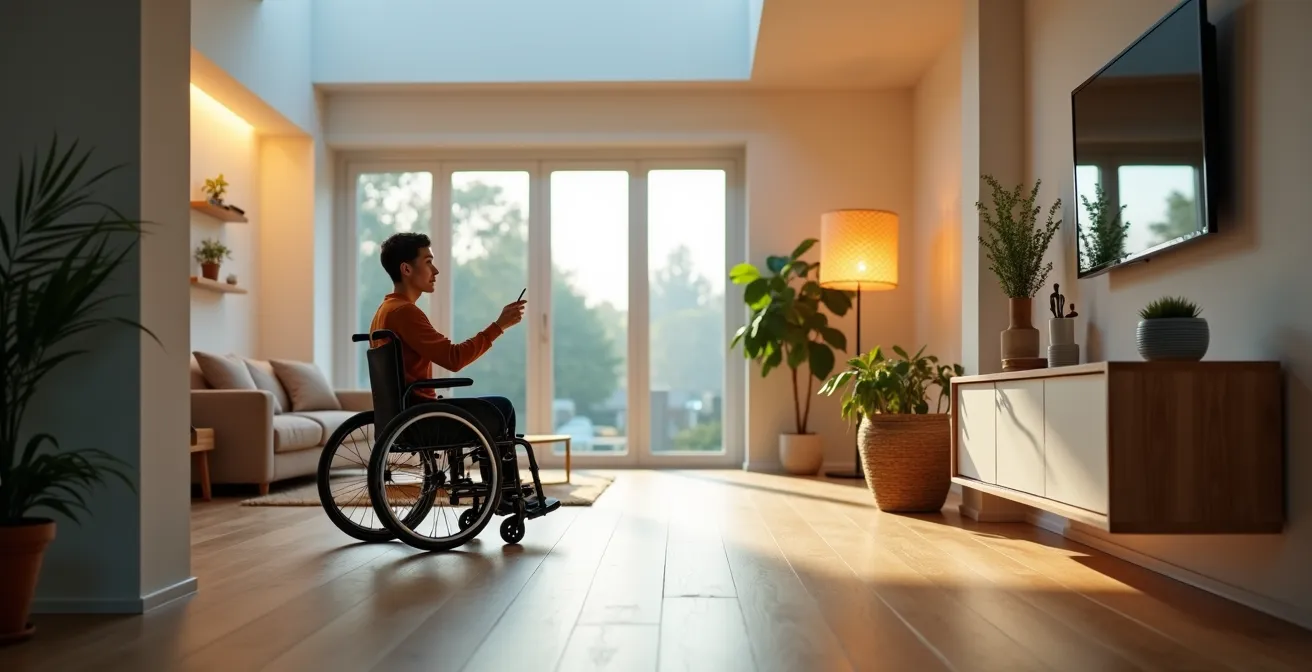
As shown here, a barrier-free environment combined with smart technology allows you to control lighting, temperature, and entertainment with your voice or a simple gesture. This isn’t about depending on technology; it’s about leveraging it to maximize your autonomy and focus your energy on what brings you joy and fulfillment. This is the essence of a dignified, independent life from a seated perspective.
Stretching Routines to Prevent Contractures in Non-Ambulatory Legs
When you stop walking, your relationship with your body enters a new phase. It requires a conscious and respectful “body dialogue” to maintain its health and prevent complications. One of the most critical parts of this dialogue is a daily stretching routine. Without regular movement, muscles and tendons in the legs can shorten, leading to painful and limiting joint contractures. Framing this practice not as a medical chore but as preventive maintenance can transform your mindset toward it.
The goal of stretching is to maintain the full range of motion in your hips, knees, and ankles. This not only prevents stiffness but also makes daily activities like dressing and transferring easier and more comfortable. For some, using a standing frame can be a valuable addition to this routine. According to guidelines for non-ambulatory individuals, active standing helps with circulation, breathing, and digestion, and may even help strengthen bones by allowing you to bear weight. This should always be done with proper joint alignment and, if necessary, partner assistance, ensuring clear communication for safety.
Integrating these practices into a daily ritual builds a powerful sense of agency over your physical well-being. It’s a tangible way to care for your body, honor its needs, and prevent future problems. Combining your stretching time with a daily skin inspection is an efficient way to address two key aspects of seated health at once.
Your 5-Point Plan for a Daily Body Dialogue
- Schedule Preventive Maintenance: Set a consistent time each day for your stretching routine, treating it with the same importance as a medical appointment.
- Communicate with Your Body: Pay close attention to sensations of tightness or discomfort. Never force a stretch; work gently to the point of tension, not pain.
- Incorporate Weight-Bearing: Discuss with your doctor or physical therapist if a standing frame is appropriate for you to gain the benefits of weight-bearing.
- Partner for Safety: If you use partner-assisted stretching, establish clear communication signals for “stop,” “gentler,” and “hold” to ensure safety and trust.
- Track Your Progress: Note small improvements in flexibility or comfort. This reinforces the value of your daily efforts and builds momentum.
The Risk of Pressure Sores When Ambulation Stops
One of the most serious and often overlooked health risks for non-ambulatory individuals is the development of pressure sores, also known as pressure ulcers or injuries. When you remain seated for long periods, constant pressure on the skin, particularly over bony areas like the tailbone, hips, and heels, can restrict blood flow. This can cause the skin and underlying tissue to break down, leading to painful, hard-to-heal wounds that can result in severe infections.
The risk is not to be underestimated. While statistics vary, research into high-risk populations provides a stark warning; for example, studies show the incidence of pressure ulcers in patients with SCI is 25%–66%. This highlights the critical importance of proactive prevention for anyone who spends the majority of their day in a wheelchair. Prevention is not a one-time fix but a continuous system of habits and equipment working together.
A multi-layered approach is the most effective strategy for prevention. This starts with the most basic habit—regular weight shifts—and extends to using sophisticated, pressure-relieving technology. Understanding the hierarchy of these methods allows you to create a personalized prevention plan with your healthcare provider.
The following table, based on expert recommendations, outlines the different levels of prevention. As an analysis from leading sensor technology experts shows, combining these methods provides the most robust protection.
| Prevention Level | Method | Frequency | Effectiveness |
|---|---|---|---|
| Basic | Weight shifts/repositioning | Every 15-30 minutes | Essential baseline |
| Intermediate | Pressure-relieving cushions | Continuous use | Moderate-high |
| Advanced | Smart cushions with sensors | Continuous monitoring | High with alerts |
| Comprehensive | Tilt-in-space wheelchairs | As needed | Very high for severe cases |
This isn’t just about avoiding a medical problem; it’s about preserving the integrity of your body. A healthy-skin routine, including daily inspections and proper hygiene, is a fundamental act of self-respect and a cornerstone of long-term well-being in a seated life.
How to Tell Friends You Now Use a Wheelchair?
The social transition can be just as daunting as the physical one. The fear of being seen differently, of being treated with pity, or of becoming a burden can lead to isolation. It’s a painful truth that the social stigma can be more limiting than the chair itself.
They tell me the worst part of the disease is not the loss of mobility, but the way people treat them when they are in the wheelchair.
– Parent of children with progressive condition, Four Simple Ways to Support Someone Who Uses a Wheelchair
Navigating this requires what can be called emotional labor: the work of managing your own feelings while also proactively guiding the reactions of others. The key is to take control of the narrative. Instead of waiting for awkward encounters, you can create a simple “Pre-Outing Briefing” for friends. This isn’t about asking for permission; it’s about providing information. A simple message like, “Hey, just so you know, I’m using a wheelchair now. It helps me get around and conserve energy. I can handle most things, but I’ll let you know if I need a hand,” sets a confident, matter-of-fact tone.
Your goal is to show, through your actions and words, that you are the same person. By focusing on your abilities and continuing to contribute to social plans—making reservations, researching accessible venues, being the one who remembers birthdays—you reinforce your value within the group. It’s about maintaining eye contact, engaging in conversation at an equal level, and demonstrating that the chair is a tool for engagement, not a barrier to connection.

Ultimately, a successful social life with a wheelchair looks just like a successful social life without one: filled with laughter, shared stories, and genuine connection. By setting clear expectations and modeling confidence, you teach others how to interact with you respectfully and help maintain the natural, equal dynamic of your friendships.
Applying Cognitive Behavioral Health Strategies for Senior Depression
The grief that accompanies the loss of mobility can sometimes deepen into depression. When this happens, it’s essential to have effective tools to manage your mental health. Cognitive Behavioral Therapy (CBT) offers a powerful, practical framework for this. CBT is not about forced positivity; it’s about learning to identify, challenge, and reframe the unhelpful thought patterns that fuel feelings of hopelessness and depression.
A core tenet of CBT adapted for this transition is to stop judging yourself for your situation. As psychotherapist Dr. Beth Sikora advises, a healthy mindset for wheelchair users isn’t about being happy with the circumstances. It’s about understanding it’s not your fault and actively working to identify your progress and strengths. This involves shifting focus from the past to the present. Resiliency therapy, a related approach, emphasizes staying present. By leaving what was in the past, you can feel less depressed and more optimistic about the now and the future.
It is also crucial to understand that the popular “five stages of grief” model is not a universal or scientifically validated roadmap. In fact, there is no compelling empirical evidence that grief fits into such neat stages. Your experience is your own. Allowing yourself to feel what you feel, without trying to fit it into a predefined box, is a healthier approach. Grief is a natural response, and for most people, its intensity gradually decreases over time. The goal is not to eliminate sadness, but to prevent it from becoming a prolonged state that robs you of your present life.
Choosing Between Manual and Power Wheelchairs for Long-Term Shoulder Health
The choice of a wheelchair is one of the most significant decisions you will make in this transition. It’s far more than a practical choice; it’s a decision that will profoundly impact your long-term health, independence, and quality of life. The number of older adults using wheelchairs is growing, with National Health and Aging Trends Study data showing the rate increased significantly from 4.7 per 100 people in 2011 to 7.1 in 2019. This makes understanding the options more critical than ever. The primary choice is between a manual and a power wheelchair, and a key factor in this decision should be long-term shoulder preservation.
Manual wheelchairs offer lightness and portability but come at a high cost to the upper body. Years of self-propulsion can lead to repetitive strain injuries, rotator cuff tears, and chronic shoulder pain, which can eventually create a new layer of disability. Power wheelchairs, while heavier and more expensive, eliminate this physical stress, preserving your shoulder health and upper body strength for other activities.
Your decision should be based on a realistic assessment of your physical strength, endurance, environment, and long-term goals. A hybrid approach is also possible, using a manual chair for short distances indoors and a power chair or scooter for longer outings. The following table breaks down the key considerations to discuss with your doctor and occupational therapist.
| Factor | Manual Wheelchair | Power Wheelchair |
|---|---|---|
| Shoulder Preservation | High risk of repetitive strain | Minimal upper body stress |
| Independence Level | Limited by strength/endurance | Extended range and duration |
| Portability | Lightweight, foldable | Heavier, transport challenges |
| Control Options | Direct propulsion only | Multiple: joystick, breath, head, eye-gaze |
| Cost | Lower initial and maintenance | Higher initial, ongoing charging/repairs |
Choosing the right mobility tool is an act of foresight. By prioritizing the long-term health of your body, you are making a strategic investment in your future independence and ability to engage with the world on your own terms.
Key Takeaways
- Acceptance is an active process of reframing your identity, not a passive surrender to loss.
- Your dignity is inherent and not dependent on your ability to walk; it is expressed through agency and self-respect.
- Proactive physical care (stretching, skin health) and strategic equipment choices are essential for long-term well-being.
Cultivating Harmonious Well-Being Through Intergenerational Connection
After navigating the emotional, physical, and social hurdles of this transition, the final stage of this journey is not just acceptance, but contribution. It’s about realizing that your new “seated perspective” has given you a unique form of wisdom. You have navigated a profound life change, and that experience has value. This is the shift from being a recipient of care to becoming a “Seated Sage”—a source of insight, connection, and perspective for others.
This can be beautifully expressed through intergenerational connections. Imagine a world where longtime wheelchair users mentor older adults who are just starting their journey, transforming experience into empowerment. Or picture activities where you decorate your wheelchair with grandchildren, turning a medical device into a canvas for creativity and connection. You can use the chair as a storytelling prop, a “throne” from which to share life stories with younger family members, creating a powerful oral history project.
This re-framing culminates in a new relationship with your wheelchair—not as a symbol of limitation, but as an integral part of your identity and a tool for living a full life. It becomes, as disability advocate Christina Mills so powerfully puts it, your trusted companion.
My wheelchair is my ride or die. The first time I heard that phrase used to describe someone’s most cherished companion, I smiled and thought to myself: that’s how I feel about my wheelchair… It’s not a limitation. It’s how I live and contribute to the world.
– Christina Mills, Ride & Thrive – Let’s Talk Aging & Disability
By sharing your skills, your stories, and your unique perspective, you move beyond your own journey and begin to ease the path for others. This act of contribution is the ultimate expression of a harmonious well-being, where your personal acceptance radiates outward to create a more compassionate and connected community for all ages and abilities.
This journey is a profound one, and you don’t have to navigate it alone. To apply these principles to your unique situation and develop a personalized strategy for well-being, the next logical step is to seek guidance from professionals who specialize in life transitions and senior health.
Frequently Asked Questions About Adjusting to Life in a Wheelchair
Is it normal to grieve the loss of walking ability?
Absolutely. Current bereavement literature views grief as a natural and expected response to any significant loss, including the loss of a physical function. For most individuals, these intense feelings of grief will gradually decrease over time as they adjust.
How long does the adjustment period typically last?
There is no set timeline, as everyone’s journey is unique. However, in clinical settings, professionals become concerned about “Prolonged Grief Disorder” (PGD) if an adult’s acute grief reactions persist without improvement for more than 12 months after the loss.
What if the traditional grief stages don’t match my experience?
That is perfectly normal and, in fact, expected. Despite the popular belief in clear stages of grief (denial, anger, bargaining, depression, acceptance), there has been no compelling scientific evidence to support this theory. Your grief process is personal and will not follow a predictable script.