Assistive tools & devices
The journey toward needing assistive equipment often begins subtly. A momentary wobble while stepping into the shower. Difficulty rising from a favorite chair. Pills scattered across the kitchen counter because arthritic fingers can’t manage the sorting anymore. These aren’t signs of failure—they’re signals that the right tools can restore independence, preserve dignity, and dramatically reduce the risk of injury for both seniors and their caregivers.
Assistive tools and devices encompass far more than the traditional walker or wheelchair many people envision. Today’s landscape includes sophisticated patient transfer systems, voice-activated environmental controls, automated medication dispensers, and precisely engineered bathroom equipment. Understanding which tools address specific challenges, how to select them properly, and when to transition from one solution to another can mean the difference between thriving at home and facing premature institutional care.
This comprehensive resource explores the major categories of assistive equipment, the critical safety considerations that protect both users and caregivers, and the often-overlooked emotional aspects that determine whether a device sits unused in a closet or becomes a genuine pathway to continued independence.
Understanding the Major Categories of Assistive Equipment
Assistive devices serve fundamentally different purposes, and recognizing these distinctions helps families make targeted decisions rather than feeling overwhelmed by the sheer volume of available products. The equipment landscape divides into several core categories, each addressing specific aspects of daily living.
Mobility aids range from simple quad canes providing light stability support to complex power wheelchairs offering complete freedom of movement for those unable to self-propel. Between these extremes lie walkers, rollators, manual wheelchairs, and transport chairs—each designed for particular terrain, strength levels, and use scenarios.
Transfer and lifting equipment addresses the dangerous gap between bed and wheelchair, toilet and chair, or floor and standing position. These devices protect caregivers from debilitating back injuries while ensuring the person being moved experiences dignity and safety. Options span from simple transfer boards to ceiling-mounted track systems capable of moving individuals throughout an entire home.
Bathroom safety equipment, medication management systems, and smart home technology round out the essential categories. Each plays a distinct role in maintaining the delicate balance between independence and safety that defines successful aging in place.
Patient Transfer and Lifting Equipment: Protecting Both Parties
The biomechanics of lifting another human being are brutally unforgiving. A caregiver attempting to move someone from wheelchair to bed engages in what ergonomics experts classify as high-risk manual handling—the same category as industrial workers lifting heavy machinery. The difference is that industrial workers receive extensive training and strict weight limits, while family caregivers often attempt these transfers multiple times daily with minimal guidance.
Recognizing When Manual Transfers Become Dangerous
There’s a specific moment when manual transfers cross from challenging to hazardous, and it’s often tied to weight and cooperation levels. When the person being transferred can no longer bear any weight on their legs or cannot follow multi-step instructions, the risk escalates dramatically. Caregivers who notice themselves bracing their backs, experiencing pain hours after transfers, or feeling genuine fear during the process have already passed the threshold where mechanical assistance becomes essential, not optional.
Choosing Between Portable and Permanent Solutions
Portable floor lifts offer flexibility—they can be moved between rooms and even taken on trips to family members’ homes. However, they require storage space, must be positioned correctly before each use, and demand that someone operate them. Ceiling-mounted track systems, while requiring professional installation and upfront investment, eliminate the physical effort of positioning equipment and can be designed to cover multiple rooms along a ceiling track, enabling transfers from bedroom to bathroom with remarkable ease.
The critical consideration is frequency. Families facing four or more transfers daily typically find permanent solutions transform their quality of life, while those needing occasional assistance may prefer the lower initial cost and flexibility of portable equipment.
Bathroom Safety: The Highest-Risk Room in the Home
Statistics consistently identify bathrooms as the most dangerous rooms for seniors, and the mechanics explain why. The combination of hard surfaces, water, soap residue, and the need to navigate height changes while partially undressed creates a perfect storm of fall risk. A stumble that might cause a bruise in a carpeted bedroom can result in a life-altering hip fracture when it occurs against a porcelain tub.
Understanding Fall Mechanics During Tub Entry
Entering a bathtub requires a complex sequence: lifting one leg high enough to clear a 14-18 inch barrier while balancing entirely on the other leg, then shifting weight forward and over the barrier while vision is obscured by the transition. For someone with reduced leg strength, compromised balance, or depth perception issues, this maneuver becomes exponentially more dangerous when the surfaces are slick.
Transfer benches, tub cutouts, walk-in tubs, and roll-in showers each address this challenge differently. A transfer bench allows the person to sit outside the tub and slide across, eliminating the need to step over the barrier entirely. Walk-in tubs feature watertight doors but require the user to step into an empty tub and wait for filling—a deal-breaker for those who cannot tolerate sitting in a cold space.
The Critical Importance of Precise Measurements
Installing bathroom equipment with measurements off by even two inches can render it useless or dangerous. A grab bar positioned too high provides no leverage. A shower chair that’s too tall leaves feet dangling, creating instability. Before purchasing any bathroom safety equipment, measure the specific installation space, the user’s seated height, and their reach range while seated. Most equipment cannot be returned once installed, making accurate measurement the single most important step in the selection process.
Mobility Aids: Matching Device to Terrain and Stability Needs
The assumption that mobility aids follow a simple progression—cane to walker to wheelchair—oversimplifies a nuanced decision that depends on where someone needs to move, what surfaces they’ll encounter, and how much support they require at different times of day.
Quad Canes: The Intermediate Stability Solution
A quad cane features a four-point base that provides significantly more stability than a single-point cane while remaining more maneuverable than a walker. The pyramid-shaped base allows the cane to stand independently and offers support in multiple directions. However, this same base creates a tripping hazard for anyone with shuffling gait patterns or reduced foot clearance. Quad canes excel on flat, indoor surfaces but struggle on uneven terrain where the four points cannot all contact the ground simultaneously.
Wheel Size and Its Impact on Terrain Navigation
Rollators and wheelchairs with six-inch wheels glide beautifully across smooth floors but stop abruptly when encountering door thresholds, sidewalk cracks, or outdoor terrain. Devices with eight-inch or larger wheels roll over obstacles more easily but add weight and reduce maneuverability in tight spaces. Families living in older homes with multiple thresholds or those who need outdoor access for medical appointments face a genuine dilemma: choose ease of indoor navigation or outdoor capability, as few devices excel at both.
The Manual Versus Power Wheelchair Decision
Self-propelling a manual wheelchair demands significant upper body strength and cardiovascular endurance. Covering the distance from a parking lot to a medical office can leave someone exhausted before their appointment even begins. Yet power wheelchairs bring their own challenges: they’re heavy (often 200+ pounds), limiting transportability; they require charging infrastructure; and they eliminate the physical activity that self-propulsion provides, potentially accelerating deconditioning of upper body strength.
Many mobility specialists recommend considering a manual wheelchair for in-home use paired with a power wheelchair or scooter for community outings, if budget and storage allow. This combination preserves the physical and cognitive benefits of self-propulsion during familiar routines while ensuring community participation doesn’t become so exhausting it’s avoided entirely.
Smart Technology and Medication Management: Independence Through Automation
The convergence of voice control technology and medication dispensing systems represents one of the most significant advances in assistive equipment for seniors with limited dexterity or mobility. These technologies don’t just offer convenience—they can be genuinely life-preserving for people managing complex medication regimens or those who experience sudden mobility crises.
Voice Control for Environmental Management
For someone with severe arthritis, rheumatoid flare-ups, or progressive neurological conditions, the simple act of getting up to adjust a thermostat or turn on a light can trigger significant pain. Voice-activated environmental controls eliminate the physical pain associated with these minor adjustments while also providing critical safety features. The ability to turn on exterior lights before attempting to navigate to a door at night, or to call for help without reaching for a phone, can prevent falls and ensure faster emergency response.
Configuring these systems for crisis situations requires forethought. Programming a single phrase like “I need help” to simultaneously turn on all lights, unlock the front door, and call a designated emergency contact transforms a general-purpose device into genuine safety equipment.
Automated Medication Dispensers: Solving the Dexterity Crisis
Traditional pill organizers demand fine motor control, good vision, and the cognitive ability to sort medications correctly. For seniors managing eight or more medications with varying schedules—some taken twice daily, others three times, some with food, others on an empty stomach—the potential for error becomes dangerously high. Automated dispensers pre-loaded by pharmacists or caregivers eliminate the sorting burden entirely.
These devices range from simple timed alarms to sophisticated systems that dispense exact doses, refuse to open outside scheduled times, and send alerts to family members when doses are missed. The decision between security levels often hinges on cognitive status: someone with intact decision-making may resent a locked system they cannot override, while that same security feature prevents potentially fatal double-dosing for someone experiencing memory issues.
The Emotional Journey: Overcoming Resistance and Stigma
The technical specifications of assistive equipment matter far less than whether the device actually gets used, and usage is often blocked by powerful emotional barriers that families underestimate until they encounter them directly.
The Psychology of Perceived Weakness
Visible mobility aids trigger deeply ingrained associations with dependence, old age, and diminished capability. A person who has defined themselves as strong and independent for seventy years doesn’t easily embrace a walker, even when it would prevent falls. This resistance isn’t stubbornness—it’s a legitimate grief response to changing identity and capability.
Reframing the device as a tool that enables activity rather than a symbol of disability can shift this perception. A rollator isn’t an admission that someone can’t walk; it’s the equipment that makes a trip to the farmers’ market possible again. A shower chair isn’t surrender; it’s the solution that transforms bathing from an exhausting, frightening ordeal into a relaxing, safe routine.
Customization and Personalization Matter
Generic, institutional-looking equipment reinforces the stigma. The market has responded with customizable options: walkers in colors beyond hospital gray, wheelchair accessories that express personality, cane handles in artistic designs. While these may seem like superficial concerns, they address the fundamental human need to maintain identity and self-expression. Someone willing to use a walker with a hand-painted floral design might refuse an identical model in plain aluminum.
The Dangerous Practice of Borrowing Equipment
Well-meaning friends and family often offer to lend assistive equipment, and the cost savings seem compelling. However, mobility aids are precisely sized to individual bodies. A walker at the wrong height forces compensatory postures that create pain and instability rather than relieving them. A borrowed wheelchair with a seat width two inches too narrow can cause pressure sores, while one too wide offers insufficient support. The medical complications from poorly fitted equipment often cost far more than purchasing properly sized devices would have.
Technical Considerations: The Details That Determine Safety
Beyond the major category decisions, specific technical features separate equipment that functions reliably from devices that create new hazards or fail at critical moments.
Understanding Braking Systems
Rollators and wheelchairs feature brake mechanisms ranging from simple push-down locks to hand-operated levers and even automatic braking systems that engage when the user stands. Push-down locks require the ability to balance on one leg while stomping the brake with the other—impossible for many users. Loop-style hand brakes demand grip strength that arthritic hands may not possess. Evaluating braking systems based on the user’s specific physical capabilities, not just the device’s overall quality, prevents dangerous mismatches.
Weight Capacity: The Non-Negotiable Specification
Every assistive device has a maximum weight capacity, and exceeding it compromises structural integrity in ways that may not be immediately visible. A walker rated for 250 pounds won’t necessarily collapse instantly under a 280-pound user, but the frame may bend slightly, altering geometry and creating instability. Bathroom equipment with inadequate weight ratings can fail catastrophically during use. Always select equipment rated for at least 50 pounds above the user’s current weight to provide a safety margin and accommodate normal weight fluctuations.
Maintenance: The Overlooked Essential
Assistive equipment is medical-grade safety gear, not furniture. Wheels accumulate hair and debris that impede rolling. Brake pads wear down. Bolts loosen from repeated stress. Establishing a monthly inspection routine—checking tire pressure, testing brakes, examining frames for cracks, cleaning moving parts—extends equipment life and prevents failures. Most catastrophic equipment failures occur not because the device was poorly made, but because routine maintenance was neglected until small problems became dangerous ones.
Selecting and using assistive tools and devices effectively requires balancing technical specifications, emotional readiness, practical constraints, and safety considerations. The right equipment, properly fitted and consistently used, doesn’t diminish independence—it preserves the ability to remain safely in one’s own home, maintain social connections, and continue the activities that make life meaningful. That transformation from obstacle to enabler is what makes these tools genuinely assistive rather than merely compensatory.

Selecting Transport Chairs for Frequent Doctor Visits and Travel
For caregivers, the physical toll of frequent doctor visits and travel is a major source of strain. Choosing a transport chair based solely on the senior’s needs ignores the person doing the pushing and lifting. This guide reframes the selection…
Read more
Choosing Between Manual and Power Wheelchairs for Long-Term Shoulder Health
The decision between a manual and power wheelchair is not a simple trade-off between effort and ease; it is a critical investment in your long-term bodily capital. Shoulder pain from manual propulsion is a biomechanical problem, not an inevitable fate….
Read more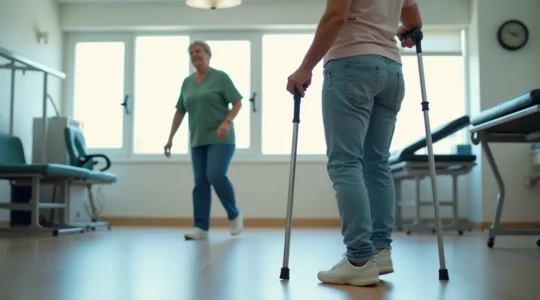
A Rehab Specialist’s Guide to Quad Canes for Stroke Recovery Stability
A quad cane is more than a walking aid; it’s a biomechanical tool that actively retrains your brain for stability after a stroke. It provides a significantly wider base of support to prevent dangerous lateral falls. Proper setup and technique…
Read more
Reclaiming Your Freedom: How to Overcome the Stigma of Mobility Aids
Using a mobility aid isn’t a sign of giving up; it’s a strategic move to enhance your performance and independence. Reframing the device as “performance equipment” rather than a “crutch” fundamentally reduces feelings of stigma. Customization, correct sizing, and proper…
Read more
How to Choose the Right Walker or Rollator for Your Strength and Terrain
Choosing the right mobility aid isn’t about the device itself; it’s about matching its features to your specific body and environment to prevent costly errors and ensure safety. Large wheels (8 inches or more) are non-negotiable for safely navigating outdoor…
Read more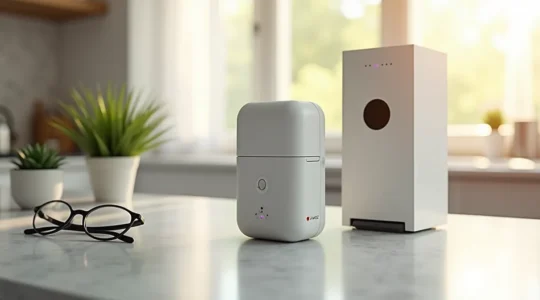
Comparing Automated Pill Organizers for Complex Medication Regimens
The best automated pill dispenser is not the one with the most features, but the one whose failure protocols and refill workflow best match your specific caregiving reality. Locked dispensers are non-negotiable for cognitive decline, preventing dangerous overdoses that simple…
Read more
Setting Up Voice-Activated Home Automation for Speech-Impaired Seniors
Effective voice control for a speech-impaired senior isn’t about finding a perfect device, but about building a forgiving, multi-layered support system. Success relies on combining simple voice commands with physical buttons and automated routines. A “tiered safety net”—from basic calls…
Read more
Selecting Transfer Benches for Bathtubs with Glass Enclosures
The presence of glass doors transforms a simple transfer bench purchase into a complex system integration challenge, where incorrect choices can create new hazards. Standard transfer benches often conflict with the tracks of sliding glass doors, making them unusable. Proper…
Read more
Choosing an Electric Patient Lift: The Definitive Guide for Homes with Narrow Doorways
Selecting a patient lift for a spatially-challenged home is a technical assessment, not a shopping trip. The primary failure point is not the lift itself, but its incompatibility with your home’s clearance geometry, including doorway width, turning radii, and under-bed…
Read more