Emergency help & safety
For older adults and individuals with limited mobility, the difference between a manageable health event and a life-threatening crisis often comes down to preparation and response time. Emergency safety isn’t just about reacting when something goes wrong—it’s about building layers of protection that prevent emergencies, detect warning signs early, and ensure help arrives quickly when needed. Yet many families struggle to understand which safety systems truly matter and how to implement them effectively.
This comprehensive resource explores the four pillars of emergency safety for seniors: medication management systems that prevent dangerous errors, wearable technology that monitors health trends before they become crises, medical alert systems that connect individuals to emergency responders, and location safety solutions for those prone to wandering. Understanding how these systems work—and more importantly, where they commonly fail—empowers families to make informed decisions that balance safety with independence.
Medication Safety: The First Line of Defense
Medication errors represent one of the most preventable yet persistent dangers facing seniors living independently. The consequences extend far beyond missed doses: research consistently links medication non-compliance to increased hospital readmission rates, creating a cycle of health decline that strains both patients and healthcare systems. The complexity of modern medication regimens—often involving multiple prescriptions taken at different times with varying food requirements—makes errors almost inevitable without proper systems in place.
Creating Reliable Reminder Systems
While smartphone apps and automated dispensers offer high-tech solutions, fail-safe medication management often requires manual backup systems that work without electricity or internet connectivity. Consider the simple effectiveness of a visual chart system: a weekly grid posted at eye level where each dose gets physically checked off after consumption. This analog approach provides immediate visual feedback—a glance reveals missed doses—and doesn’t fail during power outages or technical malfunctions.
For schedules that vary by time of day, color-coded systems prove remarkably effective. Morning medications in blue containers, afternoon doses in yellow, evening in green—this visual association creates muscle memory that reduces cognitive load. The key principle: your reminder system should require more effort to ignore than to follow.
Packaging and Organization Strategies
The physical presentation of medication significantly impacts compliance. Weekly pill organizers with individual compartments prevent the dangerous guessing game of “Did I already take that today?” However, not all organizers are created equal. Ease of opening matters tremendously—arthritis-friendly lids with large tabs or push-button releases prevent the frustration that leads people to leave medications in easier-to-open but unsorted bottles.
One critical warning deserves emphasis: never alter medication forms without professional guidance. Crushing extended-release tablets or opening time-release capsules can transform a safe medication into a dangerous overdose by releasing the entire dose immediately rather than gradually. When swallowing difficulties arise, consult a pharmacist about liquid alternatives or properly formulated dissolvable versions.
Wearable Health Monitoring: Detecting Problems Before They Escalate
Modern wearable technology has revolutionized emergency prevention by shifting healthcare from reactive to proactive monitoring. Devices that track vital signs continuously—heart rate, blood oxygen levels, activity patterns, sleep quality—generate trend data that reveals deteriorating health conditions days or weeks before they become acute emergencies. This predictive capability represents a fundamental advantage over traditional spot checks taken during occasional doctor visits.
Understanding Trend Data vs. Spot Checks
Think of the difference like weather monitoring: a single temperature reading tells you if it’s hot today, but tracking patterns over weeks reveals climate change. A blood pressure reading of 140/90 during a doctor’s visit might reflect white coat syndrome—temporary stress-induced elevation. But if a wearable device shows blood pressure gradually climbing over two weeks, that trend indicates a genuine problem requiring intervention.
Wearable devices excel at detecting subtle deviations from personal baselines. A resting heart rate that’s normally 65 beats per minute but has averaged 78 for three consecutive days might signal an infection, medication side effect, or developing cardiac issue—long before the wearer feels obviously ill. This early warning window allows for preventive medical intervention rather than emergency response.
Overcoming Device Compliance Challenges
The most sophisticated monitoring device provides zero benefit if it sits unused on a nightstand. Compliance issues with wearables typically stem from three factors:
- Form factor discomfort: Devices that cause skin irritation, feel too heavy, or interfere with daily activities get abandoned quickly. Evaluating different wearing positions (wrist, upper arm, chest, ankle) helps find the least intrusive option.
- Charging routine failures: The most common operational error is simply forgetting to charge devices. Solutions include multiple chargers at frequented locations and choosing devices with week-long battery life rather than daily charging requirements.
- Anxiety from constant monitoring: Some individuals find continuous health tracking psychologically burdensome. Adjusting alert thresholds, limiting who receives notifications, and framing data as informational rather than judgmental helps reduce this monitoring anxiety.
Device accuracy matters, but perfect precision isn’t always necessary. A heart rate monitor that’s accurate within 5% provides sufficient trend data for emergency prevention, even if it wouldn’t satisfy clinical research standards. Prioritize consistency over laboratory-grade accuracy for home monitoring applications.
Medical Alert Systems: Your Connection to Emergency Response
When an emergency occurs, the “Golden Hour”—that critical first 60 minutes after a cardiac event, stroke, or serious fall—determines outcomes more than any other factor. Medical alert systems serve one essential purpose: collapsing the time between emergency onset and professional help arrival. Yet the technology represents only half the equation; the human infrastructure behind the button matters just as much as the device itself.
The Chain of Command and Response Protocol
Understanding what happens after pressing an alert button eliminates dangerous assumptions. The typical sequence follows this pattern:
- Two-way communication establishes between the individual and a monitoring center operator who assesses the situation
- Emergency level gets defined—is this life-threatening requiring 911, or concerning but manageable with family notification?
- Appropriate responders are dispatched according to pre-established protocols in the user’s file
- Entry access is provided to responders through lockbox codes, key holder contacts, or other pre-arranged methods
Each link in this chain presents a potential failure point. Outdated contact information renders the entire system useless—a son who moved three states ago can’t provide entry access. Regular system testing, ideally monthly, verifies that connections work, operators have current information, and everyone in the communication circle knows their role.
The Human Factor Behind the Button
The most overlooked aspect of medical alert systems involves the training and capability of monitoring center operators. Not all monitoring services are equivalent. Key questions to investigate include:
- What certification do operators hold? EMT training versus basic customer service creates vastly different emergency assessment capabilities.
- How are language barriers addressed? Multilingual operator availability or translation service access proves critical in crisis moments when stress impairs second-language ability.
- What redundancy exists? If the primary monitoring center loses power or connectivity, does a backup facility automatically take over?
The critical error many families make: purchasing unmonitored devices. A pendant that simply dials pre-programmed phone numbers has no backup if those contacts don’t answer. Professional monitoring provides the redundancy that life-threatening emergencies demand.
Communication Quality During Crisis
Two-way voice communication represents the technological heart of effective medical alert systems, yet it faces surprising challenges. The physics of voice projection means someone who has fallen and is lying on the floor projects their voice differently than during testing while standing. What seemed like adequate speaker volume during setup may prove insufficient during an actual emergency.
Home “dead zones” create dangerous gaps in coverage. Bathrooms with running exhaust fans, basements with concrete walls, or large homes where the base unit sits too far from certain rooms can render communication impossible. Thorough testing involves activating the system from every room, while positioned on the floor in various locations, to identify and address these gaps.
The pendant-style versus speakerphone debate centers on this reality: pendant microphones sit close to the mouth but speakers are small, while base unit speakerphones offer powerful speakers but distant microphones. Neither solves all scenarios perfectly, which is why maintaining clear pathways to the base unit and minimizing background noise sources (televisions, fans, appliances) in primary living areas matters tremendously.
Power outage resilience deserves verification. Does the system have battery backup? For how many hours? When was that backup battery last replaced? These mundane details become life-or-death factors during storms or other emergencies that disrupt electricity.
Location Safety for Wandering-Prone Individuals
For individuals experiencing cognitive decline, wandering represents one of the most frightening safety challenges families face. Location tracking technology offers solutions, but implementing them requires navigating complex terrain between safety imperatives and personal dignity. The most effective approaches recognize this tension rather than ignoring it.
Balancing Safety and Dignity
GPS tracking devices for wandering-prone seniors range from watches and pendants to shoe inserts and clothing tags. The form factor choice involves more than technical specifications—it touches on stigma, autonomy, and self-image. A device that screams “tracking device” may be resisted or deliberately removed, while something that resembles ordinary jewelry or a fitness tracker faces less psychological resistance.
Geo-fencing technology—which triggers alerts when someone leaves a predefined safe zone—provides proactive rather than reactive protection. Setting up these virtual boundaries requires understanding daily patterns: too restrictive and the constant alerts become meaningless noise, too broad and the warning comes too late to prevent someone from reaching dangerous areas like highways or bodies of water.
Privacy concerns deserve honest acknowledgment rather than dismissal. Yes, continuous location tracking represents a significant privacy reduction. The ethical framework should involve the individual in decision-making as much as their cognitive capacity allows, clearly communicate who has access to location data, and regularly reassess whether the tracking level remains appropriate to the actual wandering risk.
Technical Considerations and Limitations
The reality of signal limitations often surprises families who assume GPS works everywhere. Dense urban areas with tall buildings, heavily wooded regions, and indoor locations can all interfere with satellite positioning. Devices that combine GPS with cellular tower triangulation and WiFi positioning provide better coverage but require ongoing cellular service subscriptions—an operational cost that must be maintained.
Battery life directly correlates with device size and tracking frequency. A small, discreet device that updates location every 30 seconds might require daily charging, while a larger unit with hourly updates could last a week. Charging routines present the same compliance challenge discussed with wearables—the device provides no protection when sitting on a charger because someone forgot to put it back on.
Multiple location safety approaches often work better than relying on a single technology. Pairing a wearable GPS device with door sensors that alert when exterior doors open creates redundancy. If the wearable battery dies or the device gets removed, the door sensor still provides notification that wandering may be occurring.
Emergency safety for seniors and those with limited mobility ultimately rests on this principle: no single system provides complete protection, but layered approaches create overlapping safety nets. Medication management prevents emergencies before they start, health monitoring detects developing problems, medical alert systems ensure rapid response when crises occur, and location safety protects those at risk of wandering. Understanding how each system works—and more importantly, how it can fail—empowers families to build truly robust safety infrastructures that preserve both life and dignity.
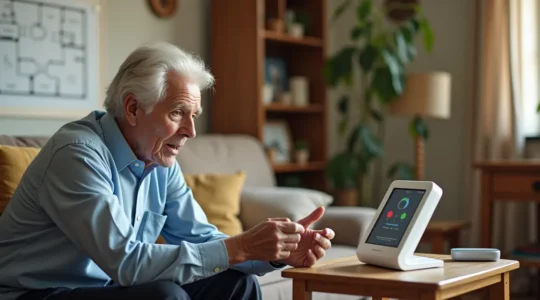
An Engineer’s Guide to Testing Two-Way Voice Consoles for Range and Clarity
True safety isn’t about advertised range; it’s about proven voice clarity within your home’s unique acoustic environment. Test for faint voice detection using a standardized whisper test to find the system’s true sensitivity limit. Systematically map acoustic “dead zones” between…
Read more
Evaluating the Reliability of 24/7 Monitoring Center Staff
The reliability of a medical alert system is not in the button, but in the human protocol that activates when it’s pressed. Non-certified centers and “family-call-only” devices introduce critical failure points during real emergencies. CSAA Five Diamond certification and geographically…
Read more
Optimizing Interactions With Emergency Dispatch Services During Crises
Pressing your alert button does not instantly summon an ambulance; it initiates a fragile chain of information where every second and every word is critical. Response is a three-stage relay: your monitoring center, the 911 dispatcher, and the EMS crew….
Read more
Comparing GPS Pendants for Dementia Wanderers: An Expert’s Analysis
A GPS tracker’s value is not in the device itself, but in the operational strategy and safety ecosystem built around it. Effective use requires a deep understanding of technological limits, such as GPS signal failure indoors and alert delays. Success…
Read more
Using Remote Patient Monitoring Wearables to Detect Heart Irregularities
The key to remotely monitoring a parent’s heart health isn’t just buying a device; it’s building a proactive health ecosystem around it. Continuous data from wearables provides a far more accurate picture of heart health than sporadic doctor visits, enabling…
Read more
A Pharmacist’s Guide to Fail-Safe Medication Adherence for Seniors with Memory Issues
Ensuring medication safety for a senior with memory issues isn’t about better reminders; it’s about building a robust system that anticipates and prevents human error. Standard pillboxes often fail due to common dexterity and cognitive challenges. Automated dispensers and pharmacist-prepared…
Read more